
Autism is a Systems Disorder
It's a spectrum of neurodevelopment shaped by genetics, biology, environment, and development. Understanding these systems can help better understand each child's strengths and challenges.
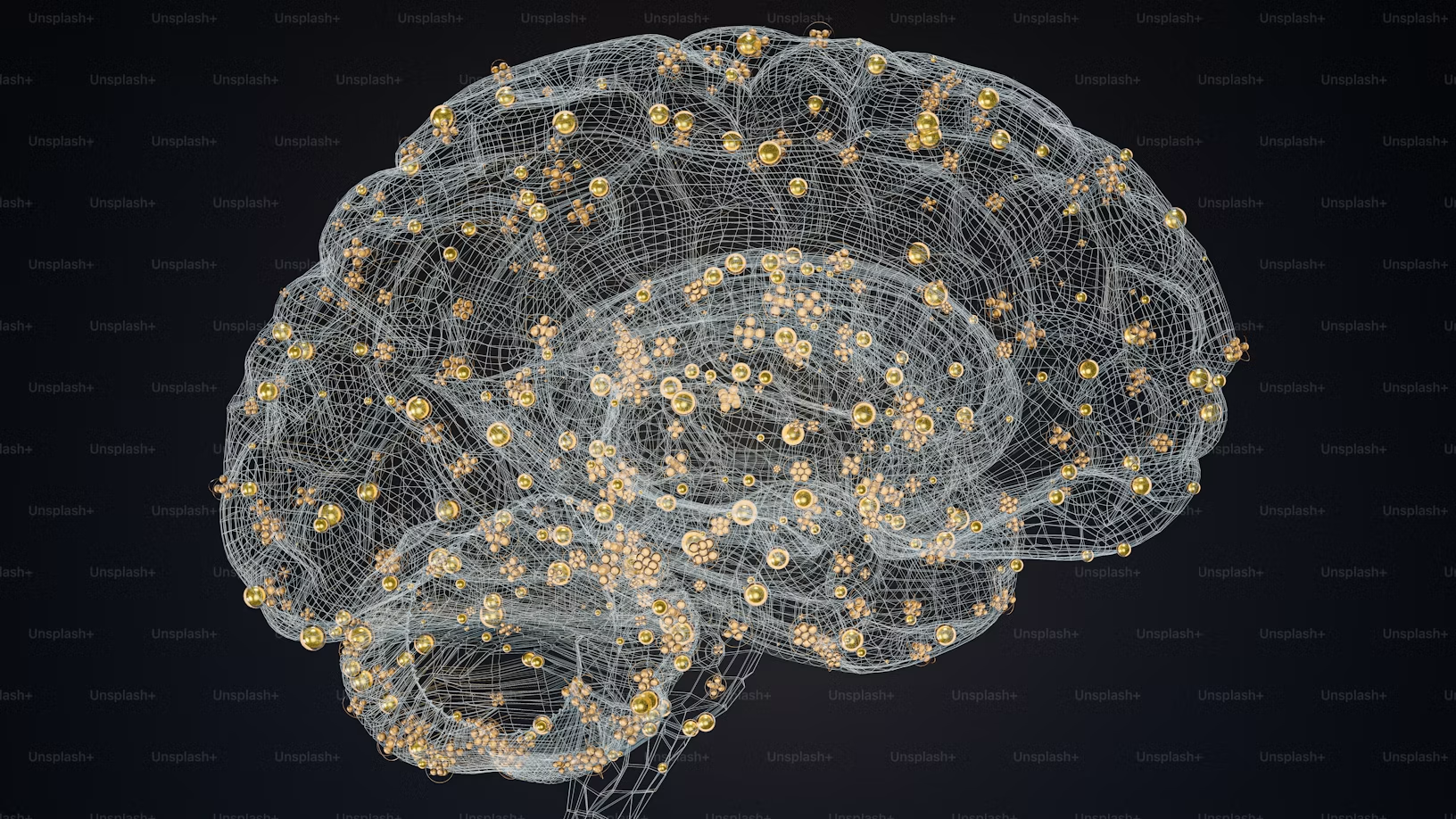
Autism Is More Than a Brain Condition—It's a Whole-Body Story
For decades, autism was viewed almost entirely as a condition of the brain. Researchers focused on differences in behavior, communication, learning, and social interaction, assuming that the answers would all be found within the nervous system.
Today, science tells a much richer story.
The brain doesn't develop in isolation. From the earliest weeks of pregnancy through childhood, it is in constant conversation with the rest of the body. The immune system helps shape brain connections. The gut microbiome produces molecules that influence brain cells. Mitochondria provide the energy needed for learning and development. Nutrition supplies the building blocks for growing neurons, while hormones, stress, sleep, and the environment continuously influence how these systems work together.
This doesn't mean autism is caused by the gut, the immune system, or any single biological pathway. Rather, autism is increasingly understood as a systems disorder—a neurodevelopmental condition that emerges from the complex interaction of many biological systems working together.
This perspective is changing how scientists study autism and how clinicians think about supporting children. Instead of asking, "What is wrong with the brain?", researchers are now asking, "How do all of the body's systems work together to support brain development?"
For families, this shift is important. It helps explain why two autistic children can have very different strengths, challenges, medical conditions, and responses to interventions. It also reminds us that supporting a child's overall health—including sleep, nutrition, digestion, and emotional well-being—is an important part of supporting brain development.
Why Autism Is Considered a Systems Disorder
Autism Spectrum Disorder (ASD) is officially classified as a neurodevelopmental disorder, meaning it affects how the brain develops and functions. Organizations such as the CDC, National Institute of Mental Health (NIMH), and Mayo Clinic continue to define autism based on its behavioral characteristics, including differences in social communication, sensory processing, and repetitive behaviors.
Those diagnostic features haven't changed.
What has changed is our understanding of the biology behind them.
Over the last fifteen years, advances in genetics, immunology, neuroscience, microbiome research, metabolomics, and systems biology have shown that the brain develops within a much larger biological network. Rather than functioning independently, the brain is constantly exchanging information with the immune system, digestive tract, endocrine system, metabolism, and even the trillions of microorganisms living inside the gut.
This doesn't mean that every autistic person has problems in all of these systems. In fact, autism is remarkably diverse. Some children experience significant gastrointestinal symptoms, while others do not. Some have sleep challenges or immune-related conditions, while others have few medical concerns outside of autism itself.
Instead, researchers believe these systems contribute differently from one individual to another, helping explain why autism is often described as a spectrum rather than a single condition.
One way to think about this is to imagine building a house.
The brain is the house itself, but it depends on many supporting systems to develop properly. Genetics provides the architectural blueprint. Nutrition delivers the construction materials. Mitochondria generate the energy to build it. The immune system coordinates repairs and protects the structure. The gut microbiome influences many of these processes by producing important signaling molecules. Hormones and the nervous system regulate timing, while environmental experiences shape how the blueprint is ultimately expressed.
If one supporting system becomes stressed or less efficient, the house may still be built—but its development may take a different path.
This concept, known as systems biology, has become one of the most important frameworks for understanding complex conditions like autism.
Rather than searching for a single cause, scientists are studying how many biological systems interact throughout development. Recent reviews by Gullapalli and colleagues (2025), Varia et al. (2025), and Carpita et al. (2020) all emphasize that autism is best understood as the result of dynamic interactions between genetics, immune regulation, metabolism, the gut microbiome, and environmental influences.
This perspective also explains why many autistic individuals experience health conditions that extend beyond the brain, including digestive disorders, sleep disturbances, anxiety, immune conditions, allergies, connective tissue differences, epilepsy, or metabolic challenges. These conditions are not part of the autism diagnosis itself, but they often occur alongside it and may share overlapping biological pathways.
Most importantly, viewing autism as a systems disorder does not mean autism is a disease that needs to be cured, nor does it suggest that every biological difference requires treatment.
Instead, it recognizes something many parents have observed for years: their child's behavior, learning, and well-being are often influenced by factors such as illness, sleep quality, digestive health, stress, nutrition, or other medical conditions.
Modern science increasingly supports those observations.
Understanding autism through a whole-body lens allows clinicians to identify treatable co-occurring conditions, personalize care, and better support each child's overall health while respecting neurodiversity.
The Developing Brain Is Connected to the Whole Body
One of the biggest discoveries in modern neuroscience is that the brain is not an isolated organ. Instead, it functions as the command center of an interconnected biological network, continuously exchanging information with nearly every major system in the body.
During pregnancy and childhood, this communication is especially important because the brain is developing at an extraordinary pace. Millions of new neural connections form every second in early life. Specialized immune cells help remove unnecessary connections, nutrients provide the raw materials needed to build neurons, mitochondria generate the energy required for growth, and hormones help coordinate the timing of development.
At the same time, the gut microbiome begins to mature. These trillions of bacteria produce vitamins, neurotransmitter precursors, and small molecules called metabolites that influence immune function, metabolism, and communication with the brain through what scientists call the microbiota-gut-brain axis.
These systems communicate through multiple pathways simultaneously:
- The immune system releases cytokines that help guide normal brain development but can also influence brain function during illness or chronic inflammation.
- The gut microbiome produces metabolites that interact with immune cells, nerve cells, and the vagus nerve.
- Mitochondria supply energy to every neuron, supporting learning, memory, and brain plasticity.
- Hormones regulate growth, stress responses, sleep, and emotional regulation.
- The autonomic nervous system constantly adjusts heart rate, digestion, breathing, and the body's response to stress.
- Nutrition provides essential fatty acids, amino acids, vitamins, and minerals that serve as the building blocks for every developing brain cell.
- Genes and epigenetic mechanisms determine how cells respond to these biological signals throughout development.
Rather than operating independently, these systems influence one another continuously. For example, a viral infection activates the immune system, which can temporarily change gut microbial composition, alter metabolism, affect sleep, and influence brain signaling. Likewise, chronic sleep deprivation can affect hormone regulation, immune function, mitochondrial performance, and emotional regulation.
This interconnectedness helps explain why a child's functioning may fluctuate from day to day. Parents often notice that their child communicates differently after poor sleep, becomes more sensitive during illness, struggles more with learning when experiencing digestive discomfort, or appears calmer after spending time outdoors and getting restorative rest. While these observations do not necessarily indicate changes in autism itself, they illustrate how the body's biological systems can influence how a child feels, learns, and functions.
Researchers increasingly describe this as a bidirectional network. The brain influences the body, and the body influences the brain.
This systems perspective is one of the reasons precision medicine is becoming such an important area of autism research. Instead of assuming that every autistic child has the same underlying biology, scientists are working to understand which biological systems may be most relevant for each individual. The goal is not to redefine autism, but to better recognize and support the unique health profile of every child.
Genetics: The Blueprint, Not the Whole Story
If you've ever wondered why autism can look so different from one child to another—even between siblings—the answer begins with genetics.
For many years, researchers searched for "the autism gene." Today, we know that there isn't one.
Instead, autism is associated with hundreds of different genes, each contributing a small part to how the brain develops. Some influence how neurons communicate with each other. Others affect the immune system, metabolism, the formation of synapses (the connections between brain cells), or how cells produce energy.
This helps explain why autism is called a spectrum. Every child has a unique genetic blueprint, resulting in different strengths, challenges, and medical needs.
But here's the important part for parents:
Genes are not destiny.
Think of genetics as the architectural plans for building a house. The blueprint determines the overall design, but the final house also depends on the quality of the building materials, the weather during construction, the workers carrying out the plan, and how the home is maintained over time.
The same is true for human development.
Genes provide the instructions, but they don't work alone. Throughout pregnancy and childhood, those instructions are constantly influenced by the child's biology and environment.
Scientists call this epigenetics.
What Is Epigenetics?
Epigenetics literally means "above genetics."
Rather than changing the DNA itself, epigenetics changes how genes are turned on or off.
Imagine your child's DNA as a giant cookbook containing thousands of recipes.
Every cell in the body owns the exact same cookbook.
Yet a brain cell only needs brain recipes.
An immune cell needs immune recipes.
A liver cell needs liver recipes.
Epigenetics acts like colorful sticky notes placed throughout the cookbook, telling each cell:
- Read this recipe.
- Skip this one.
- Use this recipe more often.
- Save this one for later.
These "sticky notes" help determine which genes are active at different stages of development.
Importantly, epigenetic changes are influenced by normal biological processes such as nutrition, hormones, sleep, stress, immune activity, and early development. This is a normal part of human biology—not something unique to autism.
Researchers are actively studying whether differences in epigenetic regulation may help explain some of the biological diversity seen across autistic individuals.
Autism Is Influenced by Many Biological Pathways
One of the biggest discoveries in autism research has been that many autism-associated genes are involved in far more than the brain alone.
Scientists have identified genes involved in:
- Brain development and synapse formation
- Immune regulation
- Mitochondrial energy production
- Protein synthesis
- Cell growth
- Communication between neurons
- Sensory processing
Rather than affecting one isolated organ, many of these genes influence multiple body systems at the same time.
This reinforces the idea that autism is a systems disorder, where many interconnected biological pathways contribute to development.
What This Means for Parents
Parents sometimes worry that a genetic diagnosis means nothing can be done to support their child.
Fortunately, that isn't how development works.
While we cannot change a person's DNA, we can support the biological systems that help the brain function at its best.
For example, ensuring good sleep, treating constipation or reflux, correcting nutritional deficiencies, managing epilepsy when present, supporting mental health, and addressing co-occurring medical conditions can all improve a child's overall well-being—even though they don't change the underlying genetics.
The goal is never to change who a child is.
The goal is to help each child thrive by understanding their unique biology.
The Immune System: One of the Brain's Greatest Partners
Most people think of the immune system as something that only fights infections.
In reality, it plays a much bigger role.
Long before a baby is born, immune cells are already helping to build the brain.
Scientists now know that the immune system helps guide many critical steps in brain development, including:
- helping neurons migrate to the right places
- forming new connections between brain cells
- removing unnecessary connections (called synaptic pruning)
- supporting learning and memory
- repairing tissue after injury
One of the most important immune cells in the brain is called the microglia.
You can think of microglia as the brain's gardeners.
Just as gardeners prune trees so they grow stronger, microglia help trim excess connections during childhood, allowing the brain's communication networks to become more efficient.
Without this process, the brain could become either under-connected or over-connected.
When the Immune System Becomes Overactive
Like every system in the body, the immune system works best when it is balanced.
During an infection, immune cells release signaling molecules called cytokines.
These molecules tell the body:
"There's an infection—let's coordinate a response."
Normally, once the infection resolves, cytokine levels return to normal.
Researchers are investigating whether some autistic individuals have differences in immune signaling or inflammatory responses. Several studies have reported altered cytokine profiles or evidence of neuroimmune activation in subsets of autistic people, although findings are not consistent across all individuals.
This is an active area of research, and scientists are still working to understand how these differences relate to brain development and day-to-day functioning.
Why Do Some Children Change During Illness?
Many parents notice something fascinating.
Their child may:
- communicate less when sick
- become more sensitive to sounds
- sleep differently
- seem more anxious
- have more repetitive behaviors
- appear more fatigued
Once they recover, many of these changes improve.
This doesn't necessarily mean the illness has changed the autism itself.
Instead, illness temporarily affects multiple biological systems—including the immune system, sleep, metabolism, and energy production—which can influence how a child functions during that period.
This is something many families recognize long before they hear the term neuroimmunology.
The Goal Isn't "No Inflammation"
Inflammation often gets a bad reputation.
But inflammation is actually one of the body's most important healing processes.
Without it, wounds wouldn't heal.
Vaccines wouldn't work.
Infections couldn't be controlled.
The goal isn't to eliminate inflammation.
The goal is healthy immune regulation—an immune system that responds when needed and returns to balance afterward.
The Gut Microbiome: The Brain's Unexpected Partner
Many parents are surprised to learn that the human gut contains trillions of microorganisms—including bacteria, viruses, and fungi—that together make up the gut microbiome.
Although these microbes live in the digestive tract, their influence extends far beyond digestion.
Over the past decade, scientists have discovered that the gut and brain are connected through a complex communication network known as the microbiota-gut-brain axis.
This communication happens through several pathways at once:
- the immune system
- the vagus nerve
- hormones
- microbial metabolites
- neurotransmitter precursors
Rather than being passive passengers, many gut microbes actively produce molecules that help regulate digestion, metabolism, immune function, and brain signaling.
Why Gut Symptoms Are Common in Autism
Digestive symptoms are among the most common medical conditions seen alongside autism.
Some children experience:
- constipation
- diarrhea
- abdominal pain
- bloating
- reflux
- food sensitivities
Others have few or no digestive symptoms at all.
Large studies suggest that gastrointestinal conditions occur more frequently in autistic individuals than in the general pediatric population, although they are not part of the diagnostic criteria for autism.
Understanding and treating gastrointestinal problems is important because chronic discomfort can affect sleep, mood, attention, learning, and quality of life in any child.
The Gut Talks to the Brain Every Day
The gut is sometimes called the body's "second brain."
While this phrase is a simplification, it reflects an important truth: the digestive tract has its own extensive nervous system and communicates constantly with the brain.
Gut microbes help produce:
- short-chain fatty acids
- vitamins
- neurotransmitter precursors
- metabolites that interact with immune cells
Researchers are studying how differences in the gut microbiome may contribute to the biological diversity seen in autism. While no single "autism microbiome" has been identified, studies consistently suggest that the microbiome may influence immune regulation, metabolism, and brain function in some individuals.
This remains an exciting and rapidly evolving area of research.
Metabolism and Mitochondria: Powering a Growing Brain
The human brain is one of the most energy-demanding organs in the body.
Although it represents only about 2% of body weight, it uses roughly 20% of the body's energy.
Every thought, every memory, every movement, and every new skill requires energy.
That energy comes from tiny structures inside nearly every cell called mitochondria.
Mitochondria are often described as the power plants of our cells because they convert nutrients from food into a usable form of energy called ATP.
Without enough ATP, brain cells cannot efficiently build connections, send signals, or adapt to new experiences.
Why Researchers Are Interested in Mitochondria
Over the past two decades, researchers have found evidence that a subset of autistic individuals show differences in mitochondrial function or energy metabolism.
Some children have diagnosed mitochondrial disorders, while others show more subtle metabolic differences that do not meet the criteria for mitochondrial disease.
Scientists are still investigating what these findings mean, but they may help explain why some autistic individuals experience:
- fatigue
- reduced stamina
- slower recovery after illness
- fluctuations in attention
- differences in exercise tolerance
These features are not universal, but they illustrate how energy production may contribute to the diverse biology of autism.
Why Metabolism Matters
Metabolism is the collection of chemical reactions that keeps every cell alive.
It determines how the body:
- produces energy
- uses nutrients
- builds proteins
- repairs cells
- removes waste products
Modern technologies such as metabolomics allow scientists to measure hundreds of small molecules involved in these processes.
Rather than looking for one single "autism biomarker," researchers are beginning to identify patterns across metabolic pathways. These patterns may eventually help clinicians better understand individual biology and guide more personalized care, although they are not yet used to diagnose autism.
What Parents Can Take Away
Genetics, the immune system, the gut microbiome, and metabolism are four pieces of the same biological puzzle.
They don't work independently.
They communicate continuously, helping shape how the brain grows, adapts, and responds to the world.
For some children, one system may play a larger role than another. For others, the interactions are different again. This is one reason autism is so diverse—and why understanding the whole child, rather than focusing on a single organ or pathway, is at the heart of modern autism research.
Nutrition and Building Blocks: Feeding a Developing Brain
If genetics provides the blueprint for brain development, nutrition provides the building materials.
Every second during early childhood, the brain is building new cells, forming new connections, strengthening important neural pathways, and removing connections that are no longer needed. To accomplish this incredible work, it requires a continuous supply of proteins, healthy fats, vitamins, minerals, and energy.
This doesn't mean that nutrition causes autism or that changing a child's diet can cure it. There is no scientific evidence supporting that claim.
However, nutrition plays an important role in supporting normal brain development, immune function, metabolism, and overall health for every child—including autistic children.
The Brain Is Built From Nutrients
Many people think of food simply as fuel.
For the brain, food is much more than calories.
Every nutrient has a specific biological job.
Healthy fats help build the membranes surrounding brain cells.
Proteins provide amino acids that become neurotransmitters such as serotonin and dopamine.
Iron helps deliver oxygen and supports learning and memory.
Vitamin D helps regulate immune function and brain development.
B vitamins are essential for producing energy and supporting hundreds of chemical reactions inside cells.
Zinc helps neurons communicate with one another.
Magnesium supports normal nerve signaling and muscle relaxation.
In other words, nutrients become part of the brain's structure and function.
Why Nutrition Can Be More Challenging in Autism
Many autistic children eat a nutritious and varied diet.
Others experience feeding challenges that can make meeting nutritional needs more difficult.
These may include:
- strong sensory preferences for certain textures or temperatures
- limited food variety
- anxiety around new foods
- gastrointestinal discomfort
- oral motor differences
- food allergies or medical dietary restrictions
These challenges are common and are not simply "picky eating." For many children, eating is influenced by sensory processing, anxiety, motor coordination, and previous experiences with discomfort.
Over time, a very restricted diet may increase the likelihood of certain nutrient deficiencies, although this varies greatly between children.
For this reason, pediatricians often recommend discussing persistent feeding concerns with healthcare professionals such as pediatric dietitians, feeding therapists, or occupational therapists.
Food Is Only One Piece of the Puzzle
Parents often ask,
"If I improve my child's diet, will autism improve?"
Current research suggests the answer is more nuanced.
Nutrition supports the body's ability to function well, but it is not a standalone treatment for autism.
Improving nutrition may help address co-occurring issues such as constipation, low energy, nutrient deficiencies, or poor growth. For some children, addressing these medical concerns may also improve attention, participation, sleep, or quality of life.
A randomized clinical trial by Adams and colleagues (2018) found that a comprehensive nutrition and dietary program improved several health measures in autistic children. However, the intervention included multiple components—including nutritional assessment, dietary improvements, supplementation, essential fatty acids, digestive support, and broader lifestyle changes—making it difficult to determine which specific elements produced the observed benefits.
The larger message is that nutrition works together with the immune system, gut microbiome, metabolism, and brain—not independently.
Hormones and the Stress Response: Helping the Body Adapt
Hormones are often associated with puberty or growth, but they influence nearly every aspect of brain development from before birth throughout adulthood.
Hormones act as the body's chemical messengers, traveling through the bloodstream to coordinate communication between organs.
They help regulate:
- growth and development
- sleep and wake cycles
- metabolism
- appetite
- emotional regulation
- reproduction
- responses to stress
The brain and endocrine system are constantly communicating, adjusting hormone levels to help the body respond to everyday challenges.
The Stress Response Is Designed to Protect Us
Imagine your child suddenly hears a loud noise.
Within seconds, the brain activates the body's stress response.
Heart rate increases.
Breathing becomes faster.
Blood sugar rises.
Muscles prepare for action.
Attention becomes focused on the potential threat.
This response is controlled largely by the hypothalamic-pituitary-adrenal (HPA) axis, which releases hormones such as cortisol.
This system is incredibly important.
Without it, we couldn't respond to danger, fight infections effectively, or adapt to change.
When Everyday Life Feels More Demanding
Many autistic individuals experience the world differently.
Bright lights, unexpected sounds, crowded environments, or rapid changes in routine may require significantly more mental and sensory effort.
Researchers are investigating whether differences in stress regulation may contribute to these experiences in some autistic individuals. Studies have reported variations in cortisol patterns and autonomic regulation, although findings remain mixed and are likely to differ across individuals.
Rather than thinking about stress as purely emotional, it's helpful to recognize that stress is also biological.
Poor sleep, illness, digestive discomfort, chronic pain, sensory overload, and anxiety can all activate the body's stress systems.
This helps explain why a child who appears "fine" one day may become overwhelmed the next after several nights of poor sleep or a busy week filled with sensory demands.
Why Recovery Matters
The healthiest stress response is not one that never activates.
It is one that activates when needed and then returns to balance.
Parents often notice that children function best when they have opportunities for recovery through:
- predictable routines
- restorative sleep
- physical activity
- time in nature
- supportive relationships
- periods of reduced sensory demand
These strategies don't change autism, but they help support the biological systems that allow children to learn, regulate emotions, and recover from everyday challenges.
The Autonomic Nervous System: The Body's Automatic Control Center
Have you ever noticed that your child's heart beats faster when they're frightened?
Or that digestion slows down during stressful moments?
Or that deep breathing helps them feel calmer?
These responses are controlled by the autonomic nervous system (ANS).
Unlike movements we consciously control, the ANS manages countless automatic functions every second of the day, including:
- heart rate
- breathing
- blood pressure
- digestion
- body temperature
- pupil size
- sweating
- bladder function
It works quietly in the background, helping the body maintain balance while adapting to changing situations.
Two Complementary Systems
The autonomic nervous system has two main branches.
The sympathetic nervous system prepares the body for action.
It is often described as the "fight, flight, or freeze" response.
The parasympathetic nervous system helps the body recover.
It slows the heart rate, supports digestion, promotes rest, and conserves energy.
Healthy regulation depends on the ability to move flexibly between these two states.
Why This Matters in Autism
Many parents describe situations where their child appears to stay in a heightened state of alertness.
Small changes in routine may feel overwhelming.
Unexpected sounds can trigger distress.
Recovering after a busy school day may take hours rather than minutes.
Researchers are increasingly studying autonomic nervous system regulation in autism because it may help explain some differences in sensory processing, emotional regulation, gastrointestinal function, and sleep.
Although not every autistic person experiences autonomic differences, many studies have found changes in measures such as heart rate variability, suggesting that some individuals may spend more time in a physiologically activated state.
This does not mean children are choosing these responses.
Rather, their nervous system may simply be working harder to process the world around them.
Understanding this can help shift our perspective from asking,
"Why won't my child calm down?"
to
"What might their nervous system be experiencing right now?"
Environmental Influences: How Life Experiences Shape Development
If genetics writes the blueprint, the environment helps shape how that blueprint unfolds.
This is one of the most misunderstood topics in autism research.
When scientists talk about environment, they are referring to everything that surrounds and interacts with our biology throughout life.
This includes:
- maternal health during pregnancy
- nutrition
- infections
- medications
- air quality
- stress
- physical activity
- sleep
- social experiences
- access to healthcare
Importantly, environment does not mean blame.
Parents do not cause autism by something they did—or didn't do—during pregnancy or childhood.
Autism is a highly heritable neurodevelopmental condition that arises through complex interactions between genetic susceptibility and biological development.
Environmental factors may influence development in some children, but they are only one piece of a much larger picture.
The Importance of Early Development
The prenatal period and early childhood represent times of extraordinary brain growth.
During these years, genes, nutrition, immune activity, hormones, and environmental experiences are all interacting simultaneously.
Researchers continue to study how these factors influence neurodevelopment, not to identify a single cause of autism, but to better understand the many pathways that contribute to healthy brain development.
This research has important implications not only for autism but also for ADHD, learning differences, anxiety, and many other neurodevelopmental conditions.
Looking at the Whole Child
One of the biggest lessons from systems biology is that no biological system works alone.
Nutrition influences the microbiome.
The microbiome influences the immune system.
The immune system communicates with the brain.
Sleep affects hormones.
Hormones influence metabolism.
Metabolism supplies energy to every brain cell.
Rather than asking which system matters most, modern science increasingly asks:
How do these systems work together?
That question is at the heart of precision medicine—and it is the foundation for understanding autism as a systems disorder.
How These Systems Work Together
Throughout this article, we've explored the many biological systems that influence brain development: genetics, the immune system, the gut microbiome, metabolism, nutrition, hormones, and the autonomic nervous system.
It might be tempting to think of these as separate chapters in a textbook.
In reality, they function more like members of an orchestra.
Each system has its own role, but none performs alone.
When they communicate effectively, the body can adapt, grow, learn, and recover from everyday challenges. When one system changes—because of illness, stress, poor sleep, nutritional deficiencies, or other medical conditions—it often influences many of the others.
This interconnectedness is one of the defining principles of systems biology, and it is transforming how scientists study autism.
A Conversation Happening Every Second
Imagine that your child catches a viral infection.
The immune system becomes activated to fight the virus.
At the same time:
- cytokines communicate with the brain
- sleep patterns may change
- appetite often decreases
- the gut microbiome temporarily shifts
- energy is redirected toward fighting the infection
- hormones adjust metabolism
- the autonomic nervous system helps coordinate the body's response
For many children—including some autistic children—parents notice temporary changes in attention, emotional regulation, sensory sensitivity, or communication during this period.
The infection itself is not changing autism.
Rather, it is temporarily affecting multiple biological systems that influence how the brain functions on that particular day.
The same principle applies to many everyday experiences.
A poor night's sleep can affect hormone regulation, immune function, emotional regulation, attention, and metabolism.
Chronic constipation may influence appetite, sleep quality, behavior, and participation in daily activities.
Periods of prolonged stress may alter cortisol production, autonomic regulation, immune signaling, and digestive function.
These examples remind us that the body works as one integrated system rather than a collection of independent organs.
The Brain Is Both a Receiver and a Sender
For many years, scientists believed that the brain simply controlled the rest of the body.
Today, we know the relationship goes both ways.
The brain sends signals that regulate digestion, heart rate, hormones, and movement.
At the same time, the body constantly sends information back to the brain about:
- nutrient availability
- inflammation
- gut microbial metabolites
- hormone levels
- oxygen supply
- stress
- pain
- infection
- temperature
The brain is continuously integrating these signals and adjusting its responses.
This two-way communication helps explain why a child's learning, attention, mood, or behavior can sometimes fluctuate depending on their overall health.
There Is No Single Autism Biology
One of the most important lessons from modern autism research is that there is no single biological profile that explains every autistic person.
This is one reason autism is called a spectrum.
Some children experience significant gastrointestinal conditions.
Others have no digestive symptoms at all.
Some have epilepsy.
Some have allergies or asthma.
Some have exceptional physical health.
Some experience sleep disorders.
Others sleep well.
Some have diagnosed genetic syndromes.
Others do not.
Likewise, researchers have found that differences in immune signaling, metabolism, mitochondrial function, or the gut microbiome are present in some autistic individuals but not others.
This biological diversity is expected.
Just as every child's personality is unique, every child's biology is unique.
Moving Toward Precision Medicine
Historically, medicine often treated autism as though every child had the same underlying biology.
Researchers now recognize that this approach has important limitations.
Instead, many scientists are working toward precision medicine—an approach that seeks to understand each person's individual biological profile rather than assuming one explanation fits everyone.
For example, one child may primarily need support for chronic gastrointestinal symptoms.
Another may benefit from better sleep management.
A third may require treatment for epilepsy, anxiety, ADHD, allergies, or nutritional deficiencies.
These interventions are not treatments for autism itself.
Rather, they address co-occurring medical conditions that may improve a child's health, comfort, participation, and quality of life.
This individualized approach reflects the growing understanding that autism is highly heterogeneous and that supporting the whole child often requires looking beyond the brain alone.
What This Means for Families
As parents, it's natural to want simple answers.
What causes autism?
Which treatment works best?
What should we do next?
One of the hardest realities of autism research is that there are rarely simple answers.
Instead, science increasingly tells us something both more complex and more hopeful.
Autism is not one condition with one biological pathway.
It is a spectrum of neurodevelopment shaped by genetics, early brain development, and the interaction of many biological systems throughout life.
For families, this perspective offers several important messages.
1. Every Child Is Unique
No two autistic children have exactly the same strengths, challenges, interests, or medical history.
Their biology is equally unique.
This is why one child may struggle with sleep while another does not.
One child may experience chronic constipation while another has no gastrointestinal concerns.
One may have significant anxiety, while another is primarily affected by sensory differences.
Understanding these differences allows healthcare teams to provide more personalized care.
2. Supporting Health Supports Development
Although autism itself is not something to be cured, every child deserves good health.
Treating constipation.
Managing epilepsy.
Correcting iron deficiency.
Improving sleep.
Addressing anxiety.
Supporting nutrition.
Managing allergies.
These interventions do not change a child's identity.
They simply help remove barriers that may interfere with learning, comfort, participation, and quality of life.
This is true for autistic and non-autistic children alike.
3. Looking Beyond Behavior
Behavior is often the most visible part of autism.
But behavior doesn't exist in isolation.
Sometimes a child who seems "defiant" is actually overwhelmed by sensory input.
A child who appears distracted may be exhausted after several nights of poor sleep.
A child who becomes irritable may be experiencing pain from constipation or reflux.
This doesn't mean every behavior has a medical cause.
Rather, it reminds us to remain curious and compassionate, asking not only "What is my child doing?" but also "What might my child be experiencing?"
That shift in perspective can transform how families, educators, and healthcare professionals support autistic children.
4. Autism Is Not Broken Biology
One of the greatest strengths of the systems approach is that it encourages us to distinguish between autism itself and co-occurring health conditions.
Autism is a natural form of human neurodiversity.
Many autistic people live healthy, fulfilling, and meaningful lives.
At the same time, some autistic individuals experience medical conditions that deserve careful evaluation and appropriate treatment.
Addressing those conditions is not about making someone "less autistic."
It is about improving health, reducing suffering, and helping every child reach their fullest potential.
Key Takeaways
- Autism is a neurodevelopmental condition, but brain development is influenced by many interconnected biological systems.
- Genetics provides the blueprint, while epigenetics, immune function, nutrition, metabolism, hormones, and environmental experiences help shape development.
- The immune system, gut microbiome, mitochondria, autonomic nervous system, and endocrine system communicate continuously with the brain.
- Every autistic child has a unique biological profile, which helps explain the tremendous diversity seen across the autism spectrum.
- Supporting overall health—including sleep, nutrition, gastrointestinal health, mental health, and co-occurring medical conditions—can improve quality of life without changing a child's identity.
- Modern autism research is moving toward precision medicine, recognizing that individualized care is more effective than assuming one biological explanation fits everyone.
Perhaps the most important lesson from today's autism research is that the brain cannot be separated from the body.
The brain develops through constant communication with the immune system, metabolism, nutrition, hormones, the gut microbiome, and the environment. Together, these systems create the foundation upon which every child grows, learns, communicates, and experiences the world.
Understanding autism as a systems disorder doesn't mean reducing a child to their biology. Nor does it suggest that autism can be explained—or treated—by any single pathway.
Instead, it invites us to see the whole child.
To recognize that behavior is only one part of a much larger biological story.
And to appreciate that supporting health is not about changing who a child is—it's about giving every child the opportunity to thrive in a way that respects both their individuality and their neurodiversity.
As research continues to evolve, this whole-body perspective is helping clinicians, scientists, and families move beyond asking "What's wrong?" toward a far more meaningful question:
"How can we best support this unique child?"
References
Adams, J. B., Audhya, T., Geis, E., Gehn, E., Fimbres, V., Pollard, E. L., Mitchell, J., Ingram, J., Hellmers, R., Laake, D., Matthews, J. S., Li, K., Naviaux, J. C., Naviaux, R. K., Adams, R. L., Coleman, D. M., & Quig, D. W. (2018). Comprehensive Nutritional and Dietary Intervention for Autism Spectrum Disorder: A Randomized, Controlled 12-Month Trial. Nutrients, 10(3), 369.
Bhalla, S., & Srivastava, R. (2026). Gut Microbiota and Mitochondrial Dysfunction in Autism: Clinical Correlations and Future Directions. Molecular Neurobiology, 63(1), 392.
Carpita, B., Marazziti, D., Palego, L., Giannaccini, G., Betti, L., & Dell'Osso, L. (2020). Microbiota, Immune System and Autism Spectrum Disorders: An Integrative Model towards Novel Treatment Options. Current Medicinal Chemistry, 27(31), 5119–5136.
Centers for Disease Control and Prevention. Autism Spectrum Disorder. https://www.cdc.gov/autism
Child Mind Institute. Autism Resources. https://childmind.org
Cleveland Clinic. Autism Spectrum Disorder. https://my.clevelandclinic.org
De Luca, F. (2020). Endocrinological Abnormalities in Autism. Seminars in Pediatric Neurology, 35, 100582.
Gullapalli, S., Baldado, L., Szobody, M. W., et al. (2025). From Molecules to Models: A Holistic Review of Autism Spectrum Disorder Mechanisms and Research Tools. Neurobiology of Disease, 217, 107187.
Mayo Clinic. Autism Spectrum Disorder. https://www.mayoclinic.org
National Institute of Mental Health. Autism Spectrum Disorder. https://www.nimh.nih.gov
National Institute of Neurological Disorders and Stroke. Autism Spectrum Disorder Information Page. https://www.ninds.nih.gov
Robas, R., Tripathi, U., Rike, W. A., Sharma, O., & Stern, S. (2025). Digestive Neurobiology in Autism: From Enteric and Central Nervous System Interactions to Shared Genetic Pathways. International Journal of Molecular Sciences, 26(19), 9580.
Rossignol, D. A., & Frye, R. E. (2012). Mitochondrial Dysfunction in Autism Spectrum Disorders: A Systematic Review and Meta-analysis. Molecular Psychiatry, 17(3), 290–314.
Siu, M. T., & Weksberg, R. (2017). Epigenetics of Autism Spectrum Disorder. Advances in Experimental Medicine and Biology, 978, 63–90.
Srikantha, P., & Mohajeri, M. H. (2019). The Possible Role of the Microbiota–Gut–Brain Axis in Autism Spectrum Disorder. International Journal of Molecular Sciences, 20(9), 2115.
Varia, J., Herbert, M., & Hooker, B. (2025). The Neuroimmunology of Autism. Molecular Neurobiology, 63(1), 316.
Williams, L. A., & LaSalle, J. M. (2022). Future Prospects for Epigenetics in Autism Spectrum Disorder. Molecular Diagnosis & Therapy, 26, 569–579.
Latest posts
Kite Health in Autism Digest
An outside look at why we're building Kite and what the testing actually shows.
Autism is a Systems Disorder
It's a spectrum of neurodevelopment shaped by genetics, biology, environment, and development. Understanding these systems can help better understand each child's strengths and challenges.
Brain Inflammation in Children
Learn how inflammation affects the developing brain, why it matters in autism and ADHD, and what biomarkers and lifestyle factors may support healthy brain development.
Exciting things are coming.
Sign up to get early access!
We’re building something great – and you’ll be the first to try it.