
Kite Health in Autism Digest
An outside look at why we're building Kite and what the testing actually shows.
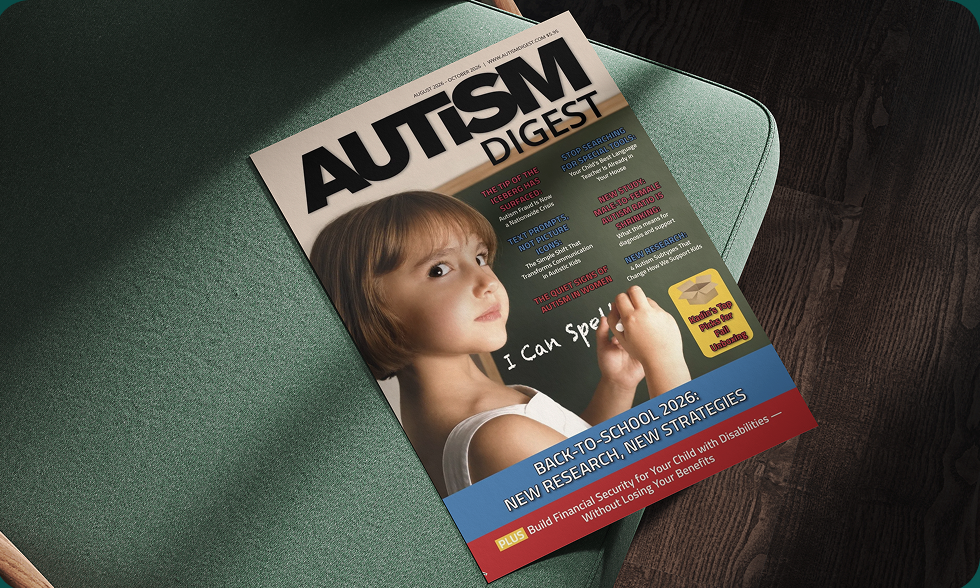
Kite has been featured in Autism Digest August 2026.
What Can Your Child's Urine Tell You About Their Health?
Introduction
Many families with kids with autism and other neurodevelopmental conditions spend months and years experimenting with different diets, supplements, and therapies, without understanding if they’re going in the right direction. Sometimes they notice improvements, and sometimes they don't. Often they don't know what to try next.
Frequently parents often expect straightforward changes in symptoms, such as more eye contact, more speech, or more calmness, missing that these changes are usually built from within the body, long before they are obvious.
Why Look Beyond Symptoms?
Symptoms are a reflection of what’s happening in the body. They stem fromare made of a hidden biological or neurological malfunction such as gastrointestinal, immune, metabolic, mitochondrial, and neurological factors. Biology may influence sleep, digestion, energy, mood, and attention, to name a few. Two children with the same diagnosis may have very different biology, and in conditions such as autism, the differences may be even greater.
When parents and caregivers implement therapies, from speech and language to biomedical, changes might be happening, often before they are not visibly obvious. The first changes many parents often to notice are related to physical and biological health (source), and may provide important indicators that underlying biological systems are responding to intervention. These changes can often be better understood with the help of lab testing. Other early signals include changes in the sensory-motor function, such as better tolerating sounds, fewer sensory meltdowns, or improved balance.
Kite Health, built on this idea, provides a step-by-step roadmap for families based on the premise that every child’s biology is unique. Understanding their biological patterns may guide more assertive decisions that families can make when discussing with their healthcare providers or just their approaches to treating their children.
What Kind Of Urine Test Can Tell Us This?
The first evidence that urine chemistry reflects internal body processes dates back to the 1840s. In the early 1900s, Sir Archibald Garrod, an English physician and professor of medicine at the University of Oxford, introduced the groundbreaking concept of inborn errors of metabolism. In 1949, other scientists advanced this work and demonstrated that abnormal organic acids and amino acid metabolites could reveal disrupted metabolic pathways. Significant discoveries follow where urine testing was used as a diagnostic tool for various metabolic disorders. such as phenylketonuria (PKU), mitochondrial disorders, and other metabolic abnormalities.
In the last 15 years, personalized medicine is increasingly using these biological clues to understand the biological differences of individuals. Hundreds to thousands of these clues can now be measured in just one urine sample.
Many of these metabolites enter the bloodstream, and some of them are then naturally removed from the body through the urine, giving us insight into chemical reactions happening throughout the body
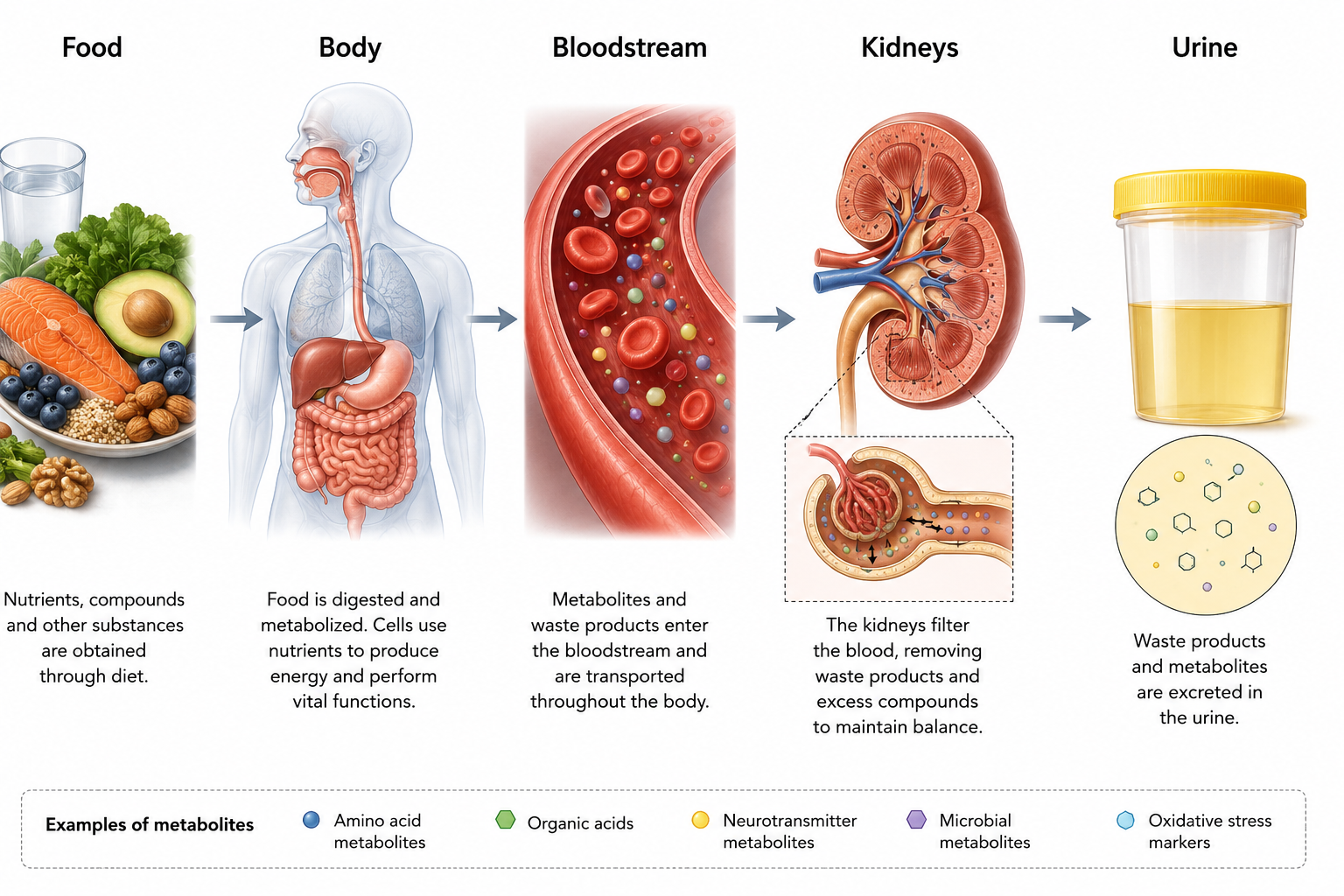

Analogy: your child’s urine is like a school report card. It shows the status of each subject. It doesn't tell the whole story about your child, but it provides valuable insights about what's been happening inside their body.
What Can It Measure?
These tiny biological clues in urine, can measure the state of a person’s food digestion, energy production, neurotransmitter making, vitamin processing, interaction with gut microbes and chemicals detoxification.
What this test can do
- Help identify biological patterns
- Support conversations with clinicians
- Guide more personalized approaches
What It Can and Cannot Tell Us
Scientists began in the early 2000s, studying the role of these tiny biological clues in complex conditions such as diabetes, cancer, Alzheimer's disease, and autism. While urine tests are not currently used to diagnose autism or ADHD, emerging science has been researching urinary signals in autism. In one study, children with ASD showed significant metabolic and nutritional differences compared with neurotypical children, including abnormalities in glutathione metabolism, methylation, sulfation, ATP production, oxidative stress, amino acids, vitamins, and essential minerals (Adams JB et al., 2011). In another study, a subgroup of autistic individuals were identified with significantly elevated gut microbial metabolites, suggesting a distinct biological phenotype rather than a single autism profile (Flynn CK et al., 2026).
Additionally, studies are demonstrating that urine testing, combined with stool and saliva, can help better understand the biological differences in autism.
What this test cannot do
- Diagnose autism or ADHD
- Predict your child's future
- Replace a healthcare professional
Why Personalization Matters
Children with autism may have very different biological patterns. For example, while one could display nutritional deficiencies in their labs, another one may show altered gut microbial activity, and another may have issues with energy metabolism. Treating them in the same way, may not be effective or demonstrate the same results. The goal is to better understand your child's biology so that decisions can be more personalized.
This is why at Kite, we start with understanding their biology and translating it into simple health domains, personalized educational content, and recommendations designed to help families have more informed conversations with their healthcare team.
Conclusion
Biology is only one part of a child’s story, but starting at the tiniest level is more effective than trying to do it all without a clear plan.
At Kite, we translate complex biology into simple, actionable insights for families. We build action plans based on scientific evidence rating (strong, moderate, or emerging), highlighting both clarity and transparency so that families can make informed decisions. If you'd like to follow our progress, join our newsletters, or be among the first to access our roadmap, join our waitlist today. The first 200 families will receive a 10% launch discount.
Join the Kite Health waitlist
Disclaimer: At Kite Health, we believe that every parent deserves access to evidence-based knowledge about their child's biology. The content in this article is provided for educational purposes and is not intended to diagnose, treat, cure, or prevent any medical condition. Laboratory testing is one piece of the child’s health puzzle and should always be discussed with a qualified healthcare professional.
References
Adams, J. B., Audhya, T., McDonough-Means, S., Rubin, R. A., Quig, D., Geis, E., Gehn, E., Loresto, M., Mitchell, J., Atwood, S., Barnhouse, S., & Lee, W. (2011). Nutritional and metabolic status of children with autism vs. neurotypical children, and the association with autism severity. Nutrition & metabolism, 8(1), 34. https://doi.org/10.1186/1743-7075-8-34
Flynn, C.K., Carr, K., Whiteley, P. et al. Elevated microbially-derived metabolites in autism: a possible diagnostic screening test for a distinct ASD phenotype. Mol Psychiatry (2026). https://doi.org/10.1038/s41380-026-03620-5
Latest posts
Kite Health in Autism Digest
An outside look at why we're building Kite and what the testing actually shows.
Autism is a Systems Disorder
It's a spectrum of neurodevelopment shaped by genetics, biology, environment, and development. Understanding these systems can help better understand each child's strengths and challenges.
Brain Inflammation in Children
Learn how inflammation affects the developing brain, why it matters in autism and ADHD, and what biomarkers and lifestyle factors may support healthy brain development.
Exciting things are coming.
Sign up to get early access!
We’re building something great – and you’ll be the first to try it.